Watercolor Blue Teddy Bear Clipart for Baby Designs
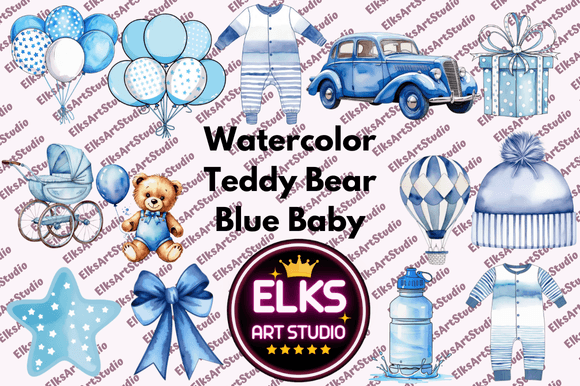
If you have worked on any baby-related creative project, you know the challenge: finding imagery that feels soft, genuine, and versatile without looking generic or overly saccharine. Watercolor Blue Teddy Bear Clipart Baby fills that gap with a gentle hand-painted aesthetic that brings warmth to invitations, nursery prints, branding, and social media content. The muted blue tones and soft watercolor texture give the teddy bear a dreamy, soothing quality that works beautifully across both digital and print mediums.
Unlike stiff vector illustrations or overly detailed realistic bears, this style strikes a balance between charming and elegant. The watercolor effect introduces subtle color variations and organic edges, making each bear feel almost like an original painting. That handmade quality resonates with audiences looking for authenticity in a world of polished, cookie-cutter design assets.
Visual Characteristics and Style Appeal
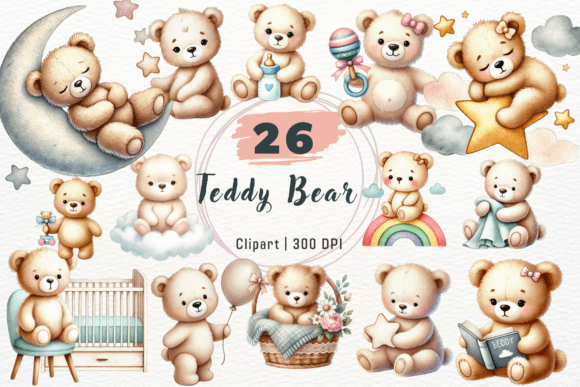
Watercolor Blue Teddy Bear Clipart Baby features a soft, slightly faded blue palette with gentle gradients and irregular edges that mimic real watercolor paper bleed. The bear itself is typically depicted in a simple, cuddly pose, often sitting or holding a small object like a heart or balloon. The blue shade ranges from pale baby blue to deeper navy washes, giving you flexibility depending on your project's mood.
The watercolor style brings a tactile, artistic feel that standard clipart collections often lack. Each bear has natural color pooling, lighter and darker areas, and a slightly uneven outline. This imperfection is what makes it feel handcrafted and emotionally warm. For baby showers, newborn announcements, or nursery wall art, that organic quality helps the design feel personal rather than mass-produced.
Because the bear is rendered in blue rather than traditional brown or white, it offers a modern twist on a classic motif. Blue works well for baby boys, of course, but it also complements gender-neutral themes when paired with soft greens, grays, or cream tones. The versatility of the blue watercolor palette makes this clipart adaptable across a wide range of aesthetic styles, from minimalist Scandinavian to whimsical storybook.
Where This Clipart Shines Across Creative Projects
This is not a one-note asset. Watercolor Blue Teddy Bear Clipart Baby fits naturally into multiple contexts, and understanding where it performs best helps you use it more intentionally.
Baby Showers and Birth Announcements
Invitations, thank-you cards, and party decorations benefit from the soft watercolor look. The bear can serve as the focal point on a flat invitation or as a subtle background element when scaled down and placed behind text. Pair it with a clean sans serif font for a modern, airy layout or a script font for a more traditional feel. The blue watercolor blends well with white, cream, gold, and dusty rose accents.
Nursery Decor and Wall Art
Printable wall art is a popular category for both personal and commercial use. A single blue teddy bear centered on a high-quality paper print creates a calming focal point for a nursery. You can layer the bear over a soft watercolor circular wash or combine it with other elements like stars, clouds, or floral sprigs. Because the bear has a painted look, it pairs well with framed prints, canvas wraps, or even fabric transfers for pillows and blankets.
Branding for Baby and Maternity Businesses
If you run a small business in the baby space, consistent brand identity matters. Using Watercolor Blue Teddy Bear Clipart Baby in your logo, website headers, social media graphics, and product packaging creates a cohesive look that feels nurturing and professional. The watercolor style communicates handmade care, which aligns well with organic baby products, maternity photography, or custom baby gifts. A logo built around this bear clipart immediately signals what your brand is about without needing extra explanation.
Children's Books and Educational Materials
Self-published authors and educational content creators will appreciate how this clipart works as a character illustration. A simple blue teddy bear can appear across multiple pages of a children's book, maintaining visual consistency while the story changes. The watercolor texture gives the illustrations a real painted-book feel, which parents and educators often prefer over flat digital art. Use it in worksheets, flashcards, or story prompts to add a gentle, friendly presence.
Social Media and Digital Content
Instagram posts, Pinterest pins, Facebook covers, and blog graphics all need strong visual hooks. A single watercolor teddy bear can anchor a quote graphic, a promotional post, or a mood board. The soft blue color works well with pastel-themed feeds and pairs naturally with natural textures like linen, wood, and paper. Because the clipart has a transparent background, it layers easily over photos or solid color blocks.
Paper Crafts and DIY Projects
Hobbyists and crafters can use the clipart for scrapbooking, card making, gift tags, party favors, and custom stationery. Print the bear onto sticker paper, cut around the watercolor edges, and apply them to notebooks, gift wrap, or party bags. The handmade look of the clipart enhances the DIY feel, making your finished projects look intentional and artisanal rather than slapped together.
How This Design Asset Influences Readability, Brand Perception, and Engagement
Visual hierarchy matters even with clipart. When you place a watercolor bear on a design, it naturally draws the eye because of its soft edges and tonal variation. Unlike sharp vector icons, this bear does not compete aggressively with text. That makes it a strong supporting element in layouts where typography is the primary voice. You can place it behind a headline or beside a body of text without overwhelming the message.
For brand perception, using a watercolor-style asset signals a focus on quality, artistry, and emotional connection. Brands that choose Watercolor Blue Teddy Bear Clipart Baby are often positioning themselves as thoughtful, gentle, and detail-oriented. That perception matters for baby-related businesses, where trust and comfort are key purchasing drivers.
Audience engagement also benefits from the emotional hook. A cute teddy bear is universally recognized and rarely provokes a negative reaction. When paired with thoughtful design, it can increase click-through rates on social media, time spent on a webpage, and the likelihood of a print product being picked up off a shelf. People are drawn to soft, warm imagery, especially when it relates to babies and childhood.
Consistency across projects becomes easier when you have a reliable design asset that works in multiple contexts. Using the same bear across your website, product packaging, and email newsletters creates a unified brand identity that feels professionally built. That consistency builds recognition over time, helping your audience associate that specific blue bear with your brand.
Practical Guidance for Choosing and Using This Clipart
Before you download and use Watercolor Blue Teddy Bear Clipart Baby in a commercial project, take a few practical steps to ensure it fits your needs and avoids problems later.
Evaluate Project Fit Beyond the Obvious
The bear works best for projects aimed at infants, toddlers, or parents. But it can also fit into nostalgia-themed designs, children's party planning, pediatric clinic materials, or even gentle mental health content aimed at adults. Think about the emotional tone you want. If your project needs calm, warmth, and approachability, this clipart is a strong candidate. If you need something bold, edgy, or high-contrast, look elsewhere.
Check the File Formats and Resolution
Good clipart sets include PNG files with transparent backgrounds and high resolution for print. For web use, 72 DPI works, but for anything printed, look for 300 DPI or higher. Vector formats like SVG or EPS allow you to resize the bear without losing quality, which matters if you plan to put it on a large banner or poster. Watercolor textures can pixelate if the resolution is too low, so always test the file at your intended output size before finalizing a layout.
Review Licensing Carefully
Commercial use is common with this type of clipart, but the license terms vary by seller. Some licenses allow unlimited commercial use, while others require a separate extended license for products you intend to sell. If you are a small business owner or entrepreneur, confirm that the clipart can be used in logo design, merchandise, digital products, or print-on-demand items. Keep a copy of the license file in your project folder for reference.
Test Color Pairings and Backgrounds
The blue watercolor bear looks best on light or neutral backgrounds where the subtle paint variations remain visible. Dark backgrounds can overpower the delicate washes. Experiment with cream, pale gray, blush pink, sage green, or soft yellow backdrops. The bear also pairs well with natural textures like kraft paper, linen, or subtle marble patterns. Avoid busy backgrounds that compete with the watercolor edges.
Pair with Complementary Typography
Typography choices affect how the bear is perceived. A playful handwritten font adds a friendly, informal feel, while a clean serif or modern sans serif creates a more refined look. For baby shower invitations, a script font with soft curves echoes the watercolor aesthetic. For brand logos, a serif font with gentle weight communicates trust and tradition. Test at least three font pairings before committing to one. The relationship between the bear and the typeface should feel balanced, not cluttered.
Think About Sizing and Placement
Because watercolor clipart has irregular edges, it does not slot neatly into rigid grid layouts. Give the bear breathing room. Avoid placing text too close to the bear's edges, as the texture can interfere with readability. Scale the bear to match the importance of its role. A large bear becomes a hero image, while a small bear works as an accent or repeating pattern element. Test different sizes to see how the watercolor detail holds up at smaller scales.
Real-World Examples and Design Observations
I have seen this style of clipart used effectively in an Etsy shop selling customizable baby shower invitations. The seller placed a single blue teddy bear in the center of the card, surrounded by a thin gold border and a script font for the guest names. The result felt premium but not overly formal, and the watercolor texture added a handmade touch that justified the higher price point over basic templates.
Another strong use case came from a maternity photographer who used the bear as a watermark overlay on sneak-peek social media posts. The soft blue blended naturally with the warm tones of the photos, and the bear became a recognizable brand symbol across her Instagram feed. She kept the bear small and semi-transparent so it did not distract from the main image, but it still added a cohesive brand thread.
On the product side, a print-on-demand shop used the bear on baby bodysuits and burp cloths. The watercolor design transferred well onto fabric, retaining its soft edges and tonal variation. Customers commented that the design looked higher quality than typical flat-print iron-on graphics. That kind of feedback reinforces the value of choosing a design asset with depth and texture.
One observation worth noting: the bear works best when you resist the urge to overcomplicate the layout. Because the watercolor style already carries visual interest, pairing it with too many additional elements can create a busy or messy composition. Let the bear breathe. A simple layout with one bear, clean typography, and plenty of white space often outperforms a crowded design both in print and on screen.
Final Thoughts on Making the Most of This Asset
Watercolor Blue Teddy Bear Clipart Baby is more than a cute graphic. It is a flexible design asset that supports emotional connection, brand consistency, and professional polish when used with intention. Whether you are designing a logo, a nursery print, a social media campaign, or a full line of baby products, the bear brings a handcrafted quality that standard clipart cannot match.
Focus on matching the bear to the mood of your project. Test your backgrounds and font choices. Read the licensing terms before you sell anything. And remember that sometimes the most powerful design move is to keep things simple and let one well-chosen element carry the emotional weight. This blue teddy bear, with its soft watercolor edges and gentle presence, is exactly that kind of element.