Watercolor Clipart Blooming Limes: A Fresh Take on Citrus Design
There is something effortlessly refreshing about citrus motifs in visual design. They bring a sense of brightness, energy, and natural simplicity that few other subjects can match. Watercolor Clipart Blooming Limes takes this appeal and elevates it with a hand-painted, organic aesthetic that feels both contemporary and timeless. Whether you are a graphic designer building a brand identity, a blogger crafting seasonal content, or a small business owner creating product packaging, this clipart set offers a versatile palette of lime illustrations that can transform your projects. The combination of soft watercolor washes, delicate blossoms, and vibrant citrus slices creates a visual language that is cheerful without being childish, and elegant without feeling stiff. In a crowded marketplace where stock imagery often feels generic, this collection stands out for its authenticity and artistic nuance.
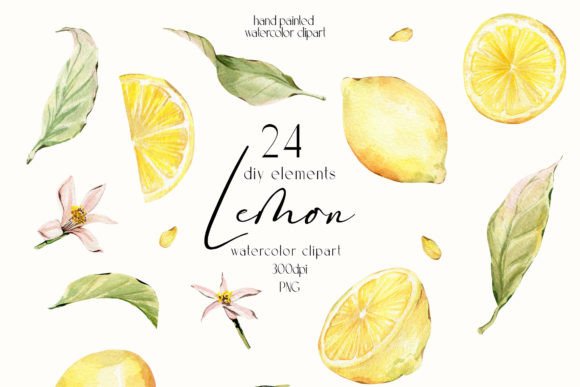
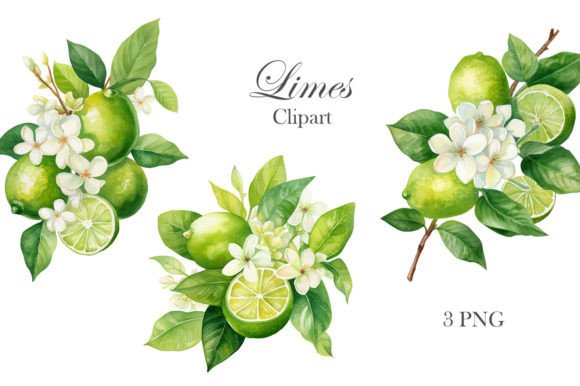
The set typically includes whole limes, sliced halves, wheels, wedges, blossoms, leaves, and sometimes botanical stems or sprigs. Each element is rendered in translucent watercolor layers, with subtle gradients, splatter effects, and natural paper textures that mimic real brushwork. This handmade quality is precisely what makes the clipart work so well across different media. It avoids the flat, overly polished look of vector-only illustrations and instead invites the viewer to connect with something that feels created, not just generated. For brands and creators looking to convey freshness, organic values, or a handcrafted ethos, Watercolor Clipart Blooming Limes delivers a genuine visual anchor.
The Visual Personality Behind the Citrus
The strongest asset of this clipart collection is its personality. Unlike rigid, geometric citrus graphics that can feel cold or overly technical, these limes carry a softness that is immediately approachable. The watercolor medium introduces natural variation in opacity and tone, so no two leaves or slices appear identical. This imperfection is a feature, not a flaw. It gives your layouts a human touch that resonates with audiences who are increasingly drawn to authentic, artisanal design languages.
The color palette revolves around fresh lime greens, pale yellows, creamy whites for blossoms, and deep forest greens for foliage. Some variations include muted sage tones or subtle blue-green shadows that add depth without overwhelming the composition. This restraint in color makes the set easy to pair with other design assets. You can drop these illustrations onto a kraft paper background for a rustic look, layer them over a pastel gradient for a modern wellness brand, or use them as bold accents on a clean white layout for a recipe blog. The versatility is baked into the technique itself.
From a design perspective, the scale and density of the clipart elements allow for flexible use. A single large lime slice can serve as a hero graphic on a product label, while clusters of blossoms and leaves can frame a headline or fill negative space in a brochure layout. Because the illustrations are not tied to a rigid grid or vector outline, they can be rotated, scaled, and arranged organically without looking pasted or artificial. This makes them particularly valuable for logo design, packaging design, and social media graphics where visual flow matters as much as the individual elements.
Where the Clipart Shines Across Projects
Watercolor Clipart Blooming Limes is not a one-trick asset. Its applications span a wide range of creative and commercial work, and understanding where it performs best can help you make smarter design decisions from the start.
Branding and Logo Design
For businesses in the food and beverage space, especially those centered on cocktails, juices, preserves, or organic produce, this clipart provides immediate visual shorthand. A lime slice paired with a clean serif font or a handwritten script creates a brand identity that feels approachable and premium at the same time. The watercolor texture adds warmth that a flat vector logo might lack, making it ideal for craft brands, local markets, and farm-to-table concepts. Even outside the food industry, the freshness implied by lime imagery works well for wellness brands, skincare lines, and eco-friendly products.
Editorial and Publishing Design
Magazines, cookbooks, and digital publications often need imagery that supports editorial content without overwhelming the text. The soft, translucent quality of watercolor clipart makes it an excellent companion for editorial design. You can use a single lime blossom as a section divider, float a cluster of leaves behind a pull quote, or create full-page backgrounds with repeated citrus motifs at low opacity. The effect is sophisticated and layered, without competing with the typography. Paired with a clean sans serif font for body text and a contrasting serif font for headlines, the clipart helps establish clear visual hierarchy while maintaining a cohesive aesthetic.
Packaging Design
Product packaging benefits greatly from the handmade feel of watercolor illustrations. Whether you are designing labels for small-batch lime marmalade, cocktail bitters, or citrus-scented candles, these clipart elements bring a tactile quality that printed photos sometimes lack. The organic edges and soft transitions between colors mimic the look of hand-painted labels, which can communicate care, craftsmanship, and premium ingredients. For small businesses that cannot afford custom illustration work, a well-curated clipart set like this offers professional-grade assets without the commission cost or turnaround time.
Social Media and Digital Content
Social media graphics demand high visual impact in a small frame. Watercolor Clipart Blooming Limes gives you bold, recognizable shapes that read well at thumbnail size. A single lime slice over a pastel background with a short quote overlaid in a modern typography style can stop a scrolling thumb in its tracks. The set also works for Instagram story highlights, Pinterest pins, blog featured images, and email headers. Because the illustrations are delivered as transparent PNG files, you can layer them seamlessly into any layout without dealing with white boxes or messy edges. This technical convenience matters when you are producing content at scale and need assets that drop in cleanly.
Influencing Readability and Visual Hierarchy
While clipart is primarily decorative, it plays a functional role in how audiences process information. The brightness of lime green naturally draws the eye, so you can use these elements strategically to guide attention where you want it. Placing a lime illustration near a call-to-action button or a headline can increase visual engagement without resorting to loud colors or aggressive animations. The soft watercolor edges prevent the element from feeling harsh or distracting, allowing the surrounding text to remain legible and dominant.
In layouts where multiple pieces of clipart are used, the natural variation in size and opacity helps establish visual hierarchy. Larger, fully opaque lime slices will command attention, while smaller, faded blossoms can recede into the background, acting as texture rather than focal points. This layered approach echoes the way modern typography uses weight, size, and color to guide reading order. When you pair the clipart with a well-chosen font pairing, the result is a composition that feels intentional and balanced. For example, a bold sans serif font for headings with a lightweight serif or script font for body copy creates contrast that complements the organic shapes of the illustrations.
Choosing and Testing the Set for Your Project
Before purchasing or downloading Watercolor Clipart Blooming Limes, take a few minutes to evaluate how it fits your specific workflow and creative goals. Not every clipart set is created equal, and a little scrutiny now can save you hours of frustration later.
- Check the file formats. Most quality sets include PNG files with transparent backgrounds, but some also offer JPEG versions, SVG vectors, or even layered PSD files. For web design and social media, PNG is your best bet. For print projects, look for high-resolution files at 300 DPI or above to avoid pixelation.
- Review the included styles. Does the set offer variations of each element? Multiple angles of lime slices, different bloom stages for flowers, and both light and dark leaves give you more composition options. A larger library of elements means you can create richer, more diverse layouts without repeating the same asset.
- Consider color consistency. Even within a single set, watercolor scans can vary in hue. This is natural and often desirable, but if you need strict color matching across your project, check the samples carefully before committing. Some sets also include editable color overlays or monochrome versions for greater control.
- Test readability with your typefaces. Drop a few elements into a test layout alongside your chosen fonts. Look for contrast in weight, texture, and tone. A delicate script font may get lost against a busy watercolor background, while a bold geometric sans serif can stand up to the visual noise. Adjust opacity or scale until the relationship feels balanced.
- Review the commercial licensing. If you are using the clipart in products for sale, such as packaging, merchandise, or digital templates, confirm that the license covers commercial use. Many clipart sets allow commercial use with attribution, while others require an extended license for large-scale distribution or resale. Know the terms before you publish.
Practical Recommendations and Real-World Use
One of the smartest ways to get the most out of Watercolor Clipart Blooming Limes is to think in layers. Instead of placing one illustration and calling it done, build compositions with multiple elements at different opacities. For a recipe card, you might place a full lime slice at full opacity in the corner, a translucent blossom at reduced opacity behind the title, and a few scattered leaves along the bottom edge. This creates depth without clutter and gives your design a polished, editorial feel.
Another approach is to use the clipart as a unifying motif across a brand system. A lime slice on your logo, a blossom on your website header, and a leaf pattern on your business cards creates visual consistency that strengthens brand recognition. Audiences may not consciously notice the repetition, but they will sense the cohesion and professionalism. This kind of system thinking separates amateur design from work that feels deliberate and trustworthy.
For content creators who produce seasonal or thematic content, this clipart set offers year-round utility. Limes are not tied to a single season the way pumpkins or snowflakes are. They work for summer cocktail promotions, winter wellness campaigns, spring garden themes, and even fall citrus recipes. The freshness of the imagery transcends holiday-specific design, making it a smart investment for creators who want assets that hold long-term value.
Finally, do not underestimate the power of negative space. Watercolor Clipart Blooming Limes looks especially striking when given room to breathe. Crowding too many elements into a layout can dilute the hand-painted charm and make the composition feel busy. Let the organic edges and soft gradients do the work. A single lime slice on a clean background with well-chosen modern typography can be far more memorable than a collage of overlapping elements. Simplicity, when paired with high-quality design assets, communicates confidence and clarity.
Whether you are refreshing a brand identity, designing a product line, or creating content that stands out in a crowded feed, this watercolor clipart collection gives you a genuine tool for visual storytelling. Its handmade character, versatile palette, and practical file formats make it a reliable asset for anyone who values both artistry and efficiency. The best design choices are the ones that feel natural, and when you work with assets that already carry warmth and personality, you are halfway to creating something people will remember.